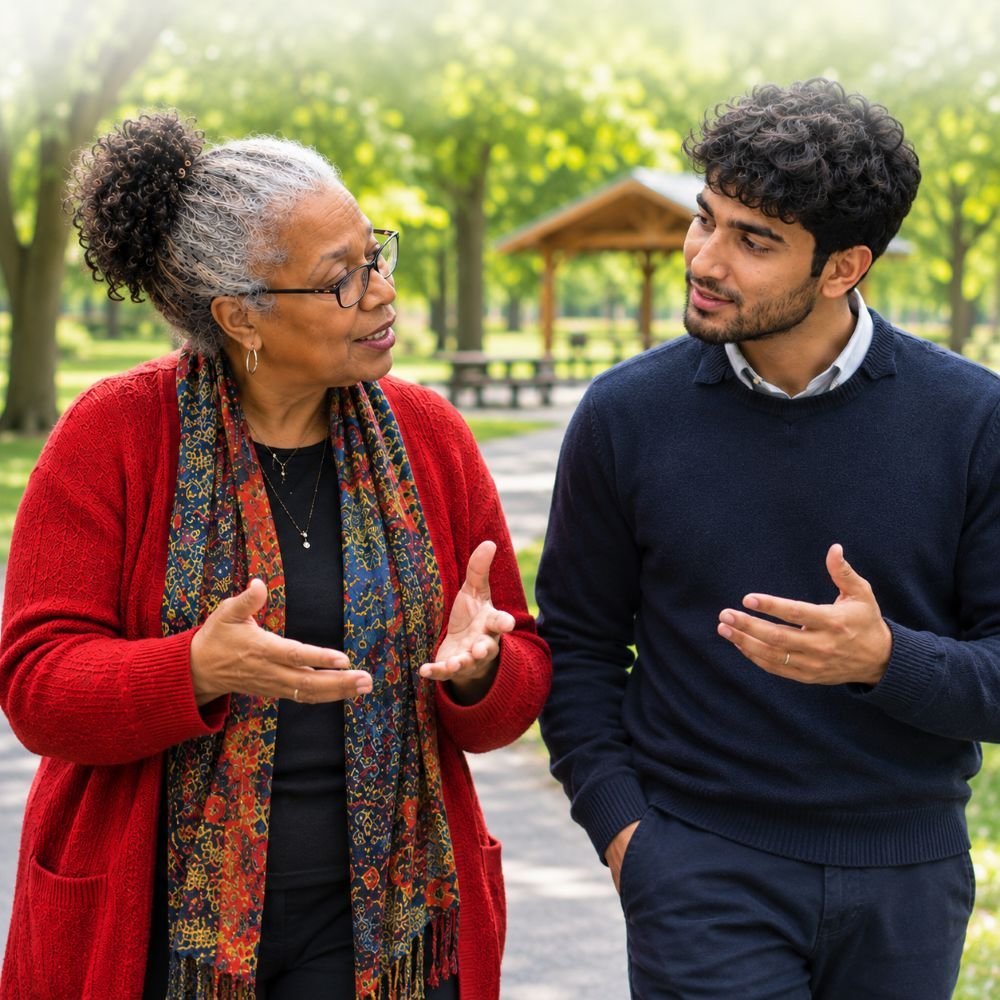
Is Ageism a Two-Way Street?
Ageism is often discussed through the experiences of older adults who feel overlooked, underestimated, or excluded because of their age. These concerns are real and deserve attention. But ageism doesn’t travel in only one direction. Younger people can also face unfair assumptions about their maturity, abilities, commitment, and judgement. We may recognize the injustice of being dismissed as too old while overlooking how readily we dismiss someone as too young. The uncomfortable truth is that we can sincerely believe in fairness while applying different standards to ourselves and others.
Our assumptions don’t always announce themselves as prejudice. More often, they feel like common sense, practical wisdom, or conclusions drawn from experience. Perhaps we’ve encountered younger people who lacked initiative or older people who resisted change. Those experiences may be genuine, but they don’t necessarily tell us anything about the next person we meet. An observation can be accurate while the generalization we draw from it is unfair. The danger begins when we stop evaluating individuals and start treating our expectations about their generation as evidence of who they are.
There’s another contradiction worth examining. We may want our years of experience to earn respect, yet feel uncomfortable when someone younger questions our advice. We might expect others to appreciate our ability to keep learning while assuming younger people lack the perspective to understand certain situations. Of course, experience matters. So do knowledge, curiosity, judgement, and the willingness to reconsider what we believe. But these qualities aren’t distributed according to birth year. Respecting experience doesn’t require treating youth as a disadvantage, any more than recognizing fresh perspectives requires dismissing the wisdom that comes with age. Fairness doesn’t mean pretending everyone has the same experience. It means refusing to let age determine whose contribution deserves consideration.
The opportunity for intergenerational understanding begins when we examine our own thinking as carefully as we examine the attitudes of others. Rather than deciding which generation is wiser, more capable, or better equipped for a changing world, we can become curious about what different people bring to the conversation. We can disagree without dismissing, question without belittling, and learn without surrendering our own experience. Challenging ageism requires more than asking others to change how they see us. It requires being equally willing to change how we see them. And that leaves us with a question worth asking ourselves: What ageism are we challenging?